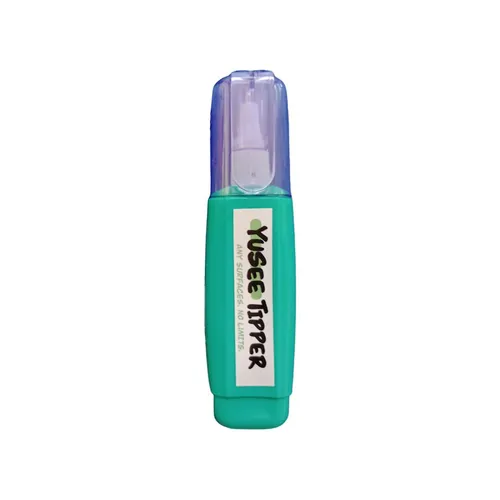
Made to cover up typos, but a graffiti classic for years. A correction marker writes opaque, fits in any pocket and leaves a line that stands out on almost any surface. That's exactly why so many writers always carry one in their bag. Whether you're tagging, finishing your blackbook or just fixing a mistake in your notes: a correction marker has you covered.
Why writers love correction markers
A correction marker looks simple, but a few features make it ideal for graffiti:
Opaque: the ink is made to hide whatever is underneath. Your line pops, even on a dark or busy surface.
Metal tip: sturdy, precise and great for clean, thin lines.
Writes on almost anything: paper, stickers, metal, plastic, glass and more.
Pocket size: always with you, no bag needed.
Affordable: a staple in your collection for just a few euros.
What do you use a correction marker for?
Tags and handstyles
The thin, crisp line of a correction marker makes it perfect for practising and refining your handstyle. Small, sharp and easy to see.
Highlights and details
A shine on your piece, a highlight on a letter or an extra detail in a character: with the fine tip you put white (or colour) exactly where you want it. A quick way to finish off a dry piece or drawing.
Blackbook and stickers
In your blackbook or on slaps and stickers, a correction marker adds that extra bit of contrast. Especially on a dark background or over an earlier layer.
And yes, just correcting
A typo in a document, a wrongly filled-in form or a messed-up letter in your sketch? That's what it was originally made for, and it's still great at it.
White or coloured?
The classic correction marker is white, and for highlights and contrast it's still the favourite. Want to play with colour? Go for a coloured version, like the Yusee Tipper Correction Marker. It has a metal tip and comes in seven colours, from white to pink, yellow and lilac.
Tips for the best result
Shake well: this mixes the ink so you get an even, opaque line.
Get the ink flowing: gently press the tip down a few times on a scrap piece before you start.
Take your time: let the ink dry before you go over it.
Cap on: this keeps the tip from drying out, so your marker lasts longer.
Frequently asked questions about correction markers
What's the difference between a correction marker and a regular marker?
A correction marker has opaque ink that's made to cover things up. A regular marker is often more transparent. That's why a correction marker line stands out more, even on a dark surface.
Which surfaces does a correction marker work on?
Most smooth and porous surfaces, like paper, stickers, metal, plastic and glass. Not sure about a specific surface? Test it on a small spot first.
Is a correction marker good for beginners?
Definitely. It's affordable, easy to use and ideal for practising your handstyle in your blackbook or sketchbook.
Need help choosing?
Not sure which marker suits what you want to make? Send us a WhatsApp or DM, we're happy to help you out.